


A vCISO is one of the highest-leverage hires a growing company can make, and one of the easiest to get wrong, because the title is unregulated and the quality varies enormously. The wrong vCISO gives you generic advice and an invoice; the right one owns your security program and earns their fee many times over. This checklist helps you choose well.
The criteria that matter
1. Real CISO-level experience
A vCISO should have actually led cybersecurity programmes at organisations like yours, not just hold certifications. Ask what security programs they have built, what compliance frameworks they have led, and what incidents they have managed. You are buying judgement formed by experience, not a virtual chief information security officer who has only held analyst or consultant roles.
Good vCISO providers have delivered real cybersecurity leadership across different industries and risk environments. Ask for specific examples: which chief information security officer roles did they hold, what SOC 2 or HIPAA audit processes did they own, and how have they handled incident response under pressure? When you hire a vCISO, you should be confident the person has done this at real organisations, not just advised from the sidelines.
Before you hire a vCISO, ask whether they can help you with a formal risk assessment, map their work to your business objectives, and demonstrate how a vCISO helps organisations build lasting security programmes. Virtual CISO services vary widely in quality; these questions separate advisors from leaders.
Facing a compliance deadline or an audit request?
Run the free security self-assessment to see exactly where your programme stands before you brief a vCISO.
2. The right industry and compliance fit
Cybersecurity leadership is more effective when the leader understands your context. A vCISO who knows your industry, your regulatory environment, and the compliance frameworks you face (SOC 2, ISO 27001, HIPAA, PCI DSS) will move faster and make better calls than a generalist. Your specific cybersecurity needs and compliance requirements deserve a vCISO with direct experience in your sector.
3. Ownership, not just advice
The point of a vCISO over a consultant is accountability. Make sure the engagement is structured around owning outcomes (the security roadmap, the compliance programme, risk reduction) rather than billing hours for advice you then have to act on alone. A dedicated vCISO takes ownership of your cybersecurity program and drives it forward; a weak one bills hours and leaves you to implement security policies yourself.
A strong vCISO provides clear deliverables: a risk assessment, a prioritised security roadmap aligned to your business objectives, and measurable progress on compliance requirements. A vCISO offers strategic guidance without the cost of a full-time executive hire. Ask any candidate how they track progress and how they demonstrate that what a vCISO provides is actually reducing your risk, not just generating documentation. The cost of a full-time CISO is rarely justified for companies under a certain size; a vCISO can help you get the same outcomes without the full-time overhead and without the cost of a full-time hire when you are not ready for it.
4. The right level of involvement
A good vCISO scopes the time you actually need, whether that is a few days a month of oversight or a more hands-on engagement during a compliance push. The overhead of a full-time hire is not always necessary; what matters is that the vCISO is accountable, not just available. Be wary of both extremes: too little to be accountable, or padded hours you do not need.
Ask prospective vCISO providers whether they can scale their involvement up or down as your cybersecurity needs change. A scalable engagement that can grow from part-time oversight to a more intensive compliance or incident response period is a sign of a mature vCISO service provider. Many companies choose a vCISO over a full-time CISO hire precisely because the engagement can flex: if you eventually decide to hire a full-time CISO in-house, a good vCISO will have built the programme that makes that hire productive from day one.
5. They strengthen your team, not bypass it
The best vCISOs make your existing people more effective: setting direction, mentoring, and putting structure in place. A vCISO brings cybersecurity strategies and security policies to your team, not just to themselves. Avoid anyone who creates dependency by keeping everything in their own head. The objective should be a stronger in-house security capability, even when you do not need a full-time in-house CISO.
6. Communication with the business
A vCISO has to translate cybersecurity into terms your board, investors, and enterprise customers understand. Ask how they report, how they handle board and customer conversations, and whether they can represent you in a customer's security review. A virtual CISO who cannot clearly communicate your security posture and strategic guidance to non-technical stakeholders is not the right choice.
7. Independence and honesty
A vCISO who is honest about what you do and do not need, and who is not just steering you toward products they resell, is worth far more than one who treats every problem as a reason to spend. Whether you need a vCISO or can handle certain cybersecurity needs in-house without the overhead of additional services, a good vCISO will tell you. The right vciso provider gives you objective direction rather than agenda-driven recommendations.
Use this scorecard on any provider
Run each candidate against these seven criteria. A provider who scores well on experience, compliance fit, and ownership accountability is the one worth engaging. Certifications alone are not a substitute for demonstrated leadership.
| Criterion | What good looks like | Your candidate? |
|---|---|---|
| Real CISO-level experience | Led programmes, managed incidents, built security teams. Specific examples shared. | Y / N |
| Industry and compliance fit | Direct experience with your framework: SOC 2, ISO 27001, HIPAA, or PCI DSS. | Y / N |
| Ownership, not advice | Engagement built around outcomes and deliverables, not advisory hours. | Y / N |
| Right level of involvement | Scalable engagement, scoped to your genuine need. Not a fixed package. | Y / N |
| Strengthens your team | Direction, mentoring, structure. No dependency. Builds in-house capability. | Y / N |
| Business communication | Can present to board, investors, and customer security reviews. | Y / N |
| Independence and honesty | Objective advice. No products to push. Will tell you what you do not need. | Y / N |
Red flags
A vCISO who leads with certifications instead of cybersecurity leadership experience, who cannot speak to your industry or compliance frameworks, who bills hours rather than owning outcomes, who creates dependency, or who pushes products over judgement, is the wrong choice. Be especially cautious of vCISO providers who cannot explain how they handle incident response, what security policies they have implemented, or what compliance audits they have actually led.
How Onyx helps
Onyx provides vCISO leadership scaled to your needs: cybersecurity strategy and roadmap, risk management, compliance leadership across SOC 2, ISO 27001, HIPAA, and PCI DSS, governance, incident response planning, and board and customer communication. We own outcomes, strengthen your existing team rather than bypassing it, and give you honest direction on what you actually need. Whether you are looking for the right vCISO to lead your first compliance programme or need to implement security policies across your organisation, we scope the right level of involvement for your situation.
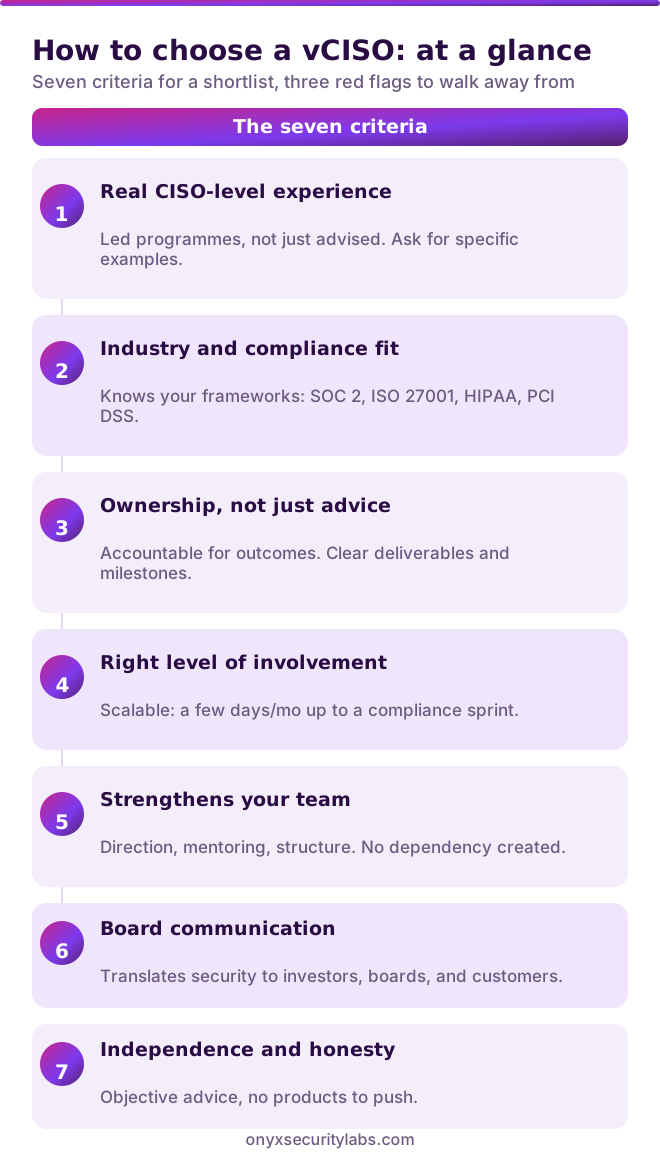
The checklist at a glance, to save or share with your team:
Ready to put a vCISO in place?
Tell us your situation and we will scope the right level of leadership on a short call. No pressure, no obligation.
See also: what is a vCISO, fractional CISO vs vCISO vs full-time CISO, and our vCISO service page. Or take the free security self-assessment first.
FAQ
How do I choose a vCISO service?
Look for real cybersecurity leadership experience, the right industry and compliance fit, an engagement built around owning outcomes rather than billing advice, an appropriate level of involvement, a vCISO who strengthens your security team, strong business communication, and the honesty to tell you what you do not need. Judge on demonstrated leadership, not certifications alone.
What should a vCISO be responsible for?
Owning your cybersecurity strategy and roadmap, managing risk, leading compliance frameworks like SOC 2 and HIPAA, establishing governance and security policies, ensuring incident response readiness, and communicating your security posture to your board, investors, and customers. The difference from a consultant is accountability for outcomes over time.
What are the red flags when hiring a vCISO?
A vCISO who leads with certifications instead of cybersecurity leadership experience, cannot speak to your industry or compliance frameworks, bills hours rather than owning outcomes, creates dependency by keeping everything to themselves, or pushes products they resell over honest judgement.
How much vCISO time do I need?
It depends on your size, risk, and what you are working on. It might be a few days a month of hands-on oversight, or a more intensive engagement during a compliance audit or incident response period. A good vCISO scopes the time you genuinely need rather than padding hours. The overhead should match your real cybersecurity needs, not a fixed package.
Can a vCISO represent us in a customer's security review?
A good virtual CISO can, translating your security posture into terms a customer's security and procurement teams understand and standing behind it in the review. Ask prospective vCISOs how they handle customer and board conversations and whether they have experience with your compliance requirements.