

ISO/IEC 27001 and SOC 2 both signal that you take information security seriously. When a customer, partner, or procurement team asks which one you hold, the answer matters. This guide explains the difference between SOC 2 and ISO 27001 in practical terms. Whether you are choosing between ISO 27001 and SOC 2 for the first time, or planning to hold both, the question has a clear answer when you know your markets, who asks for each, how they overlap, and how to decide which to pursue first.
The core difference: certificate versus report
ISO 27001 is an international standard that certifies you operate an information security management system (ISMS). An independent accredited certification body audits your ISMS against the requirements of ISO/IEC 27001 and issues a certificate when satisfied. The certificate is a single document that states, in effect, that your security management system meets the ISO 27001 standard.
SOC 2 is an attestation report, defined by the AICPA (the American Institute of Certified Public Accountants). A licensed CPA firm examines your controls against the Trust Services Criteria and produces a SOC 2 report that a customer can read in detail. There is no SOC 2 certification in the strict sense; there is a SOC 2 attestation. The output is a report, not a certificate.
The key differences between the two frameworks centre on that fundamental distinction: certificate versus detailed report. That difference shapes which framework your customers and target markets will ask for.
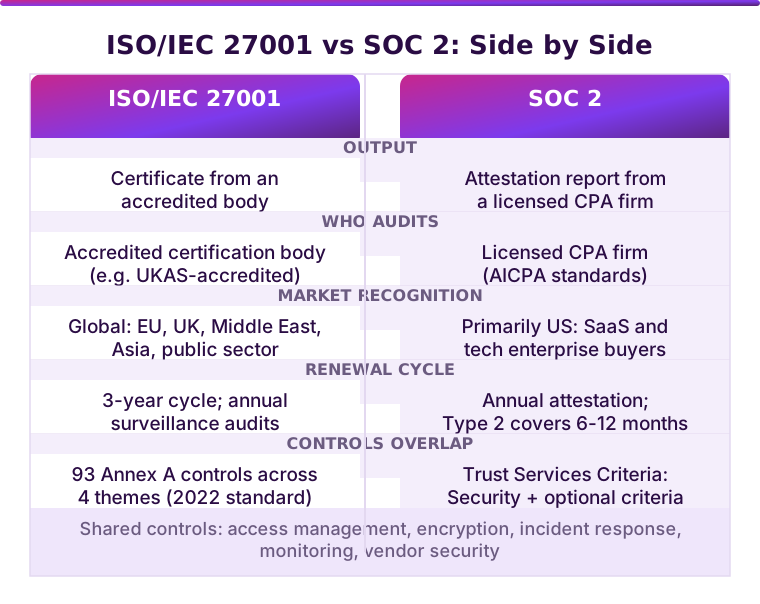
Who asks for which
The simplest decision rule is: pursue the one your buyers request.
- SOC 2 is dominant in the United States, particularly among technology companies and SaaS buyers. US security teams are accustomed to reviewing SOC 2 reports as part of vendor due diligence. If your primary market is US enterprise or SaaS customers, SOC 2 is usually what they will ask for first. SOC 2 has become a widely expected requirement in many US B2B software sales processes, particularly for enterprise buyers.
- ISO 27001 is more recognised internationally, with enterprise buyers and procurement teams in Europe, the UK, the Middle East, and Asia preferring a certificate against a global standard. Public sector organisations and buyers who require a certifiable standard rather than an attestation report generally ask for ISO 27001.
The key difference in practical terms is not which framework is more rigorous. It is which your buyers will accept. Let market demand drive the decision.
Not sure which framework your buyers are asking for?
Run the free 15-question self-assessment and get a readiness score that maps to both frameworks.
How ISO 27001 and SOC 2 overlap
Despite being different frameworks with different outputs, ISO 27001 and SOC 2 share a large portion of the underlying security work. Both require risk-based controls across the same core security domains:
- Access management and identity controls
- Encryption and data protection
- Monitoring, logging, and anomaly detection
- Change management and software deployment controls
- Vendor and supplier security management
- Incident response planning and procedures
- Business continuity and availability controls
If you implement a solid ISMS for ISO 27001, the information security management system you build maps heavily to the SOC 2 Trust Services Criteria, and vice versa. The overlap between ISO 27001 and SOC 2 at the controls level means that organisations holding both can reuse most of their evidence, documentation, and security practices across both frameworks. This is the main reason many organisations eventually pursue ISO 27001 and SOC 2 together: once you have built the controls for one, adding the other is substantially less work.
Practical differences that matter when choosing
Understanding the structural differences between the two frameworks helps you plan the effort involved:
- Output format. ISO 27001 produces a certificate stating your ISMS is certified against the standard. SOC 2 produces a Type 1 or Type 2 report. A SOC 2 Type 1 report attests to the design of your controls at a point in time. A SOC 2 Type 2 report attests to the operating effectiveness of your controls over an observation period agreed with the CPA firm, commonly six to twelve months in practice. Many customers require SOC 2 Type 2 because it demonstrates controls actually operated, not just that they were designed.
- Who audits. An accredited certification body conducts the ISO 27001 audit and issues the certificate. A licensed CPA firm conducts the SOC 2 audit. These are different types of auditors with different qualifications and different regulatory frameworks.
- Cycle and renewal. ISO 27001 runs on a three-year cycle with annual surveillance audits. The SOC 2 Type 2 attestation is typically renewed annually, covering a fresh observation period each year.
- Scope flexibility. ISO 27001 certifies your defined ISMS scope. SOC 2 focuses on the Trust Services Criteria you select. Most organisations include the Security criterion as a minimum; Availability, Confidentiality, Processing Integrity, and Privacy can be added depending on customer requirements.
- Global versus regional recognition. ISO 27001 certification is recognised globally and carries weight across a wide range of industries and geographies. SOC 2 attestation is primarily recognised in North American markets, though US buyers often insist on it regardless of where you operate.
| Factor | ISO/IEC 27001 | SOC 2 |
|---|---|---|
| Output | Certificate from accredited body | Attestation report from licensed CPA |
| Who audits | Accredited certification body | Licensed CPA firm (AICPA) |
| Audit type | Stage 1 (docs) + Stage 2 (operational) | Type 1 (design) or Type 2 (operating effectiveness) |
| Cycle | 3 years + annual surveillance | Annual Type 2 attestation |
| Recognition | Global; strong in EU, UK, Middle East, Asia | Primarily US technology and SaaS buyers |
| Scope | Defined ISMS scope | Selected Trust Services Criteria |
The difference between ISO 27001 and SOC 2 in audit type
One of the important differences between ISO 27001 and SOC 2 is what the audit actually examines. The ISO 27001 certification audit checks that your ISMS is correctly designed (Stage 1) and that your controls are operating effectively (Stage 2). It certifies the management system as a whole.
A SOC 2 audit examines your controls against the specific Trust Services Criteria you have included. For the Type 2 attestation, the auditor reviews evidence that controls operated consistently over the observation period. The SOC 2 report describes each criterion, the controls you have in place, the tests the auditor performed, and the results. A customer reading a SOC 2 Type 2 report gets more granular detail than they get from an ISO 27001 certificate.
This is why some US buyers prefer SOC 2 even though ISO 27001 is arguably a more comprehensive certification: they can read the report and evaluate it themselves. An ISO 27001 certificate tells them a qualified body reached a positive conclusion; a SOC 2 report shows them the reasoning.
Should you get ISO 27001 or SOC 2?
For most organisations the answer is determined by where your customers are and what they ask for. A few practical scenarios:
- Primarily US SaaS or technology company: Start with SOC 2. It is what your procurement contacts will ask for, and the Type 2 attestation is widely expected by enterprise buyers in many US sectors.
- Primarily UK, EU, or international enterprise: Start with ISO 27001. International enterprise buyers and public sector organisations recognise and trust the ISO 27001 certificate.
- Serving both markets: Consider which opens the most value first, then add the other. The convergence between ISO 27001 and SOC 2 at the controls level means you do not start from scratch when you add the second framework.
- Regulated industries: Some sectors, such as financial services, healthcare, or government supply chains, specify which frameworks are acceptable. Check your regulatory and contractual obligations before choosing.
Can you hold both ISO 27001 and SOC 2?
Yes, and many organisations that serve both US and international buyers do. The ISO 27001 and SOC 2 frameworks overlap enough at the controls level that holding both does not require building two completely separate security programmes. Most of the risk assessment, access management controls, incident response procedures, monitoring, and vendor management work you do for ISO 27001 applies directly to SOC 2 requirements as well.
The additional effort when you pursue SOC 2 and ISO 27001 together versus sequentially is mainly in documentation formatting, the specific audit process, and the different evidence requirements of each framework. The underlying security controls and information security management practices are largely the same.
If you are planning to hold both, the most efficient approach is to design your ISMS with both frameworks in mind from the start rather than adding the second as an afterthought. This is where an experienced consultant who understands both frameworks can reduce overall effort significantly.
A deeper look at the ISO 27001 certification process vs SOC 2 audits
Understanding the operational differences in how each framework is audited helps you plan the effort involved.
The ISO 27001 Stage 2 audit in detail
The ISO 27001 external audit is conducted by an accredited certification body independent of any consultant who helped you prepare. It has two stages. Stage 1 is a documentation review confirming the system is correctly designed and you are ready. Stage 2 is the main operational audit, verifying that controls are implemented and operating effectively. ISO 27001 certification requires the auditor to test your controls actively, not just review documentation.
The audit process from first contact with the certification body through to certificate issuance typically takes several weeks to a few months depending on findings and remediation. The process must also include an observation period during which your ISMS operates before the Stage 2 audit, so the auditor can review real operating evidence rather than theoretical documentation.
How SOC 2 audits compare
SOC 2 Type 2 audits cover an observation period agreed with the CPA firm, commonly six to twelve months in practice, confirming controls operated consistently. The resulting report describes each Trust Services Criterion, the controls in place, tests performed, and results. SOC 2 focuses on confirming operating effectiveness over a defined period, and the report describes exceptions if found rather than providing a binary pass or fail. Holding a clean SOC 2 Type 2 report is the commercial objective most organisations have in mind.
SOC 2 audits are conducted by licensed CPA firms, a different professional designation from the accredited certification bodies that conduct ISO 27001 audits. The SOC 2 report is considerably longer and more detailed than an ISO 27001 certificate and is typically shared directly with customers under NDA.
How ISO 27001 requirements map to SOC 2 Trust Services Criteria
ISO/IEC 27001:2022 Annex A is structured across 93 controls organised into four themes. The SOC 2 Trust Services Criteria cover access management, change management, risk assessment, monitoring, and incident response in the Security criterion, plus optional criteria for availability, processing integrity, confidentiality, and privacy. The overlap between the Annex A controls and the SOC 2 Security criterion is substantial. Most controls evidence for one maps directly to the other, which is why organisations that implement one well can typically add the other with significantly less incremental effort.
ISO 27001 compliance versus SOC 2: what customers actually see
ISO 27001 compliance is demonstrated by showing a valid certificate from an accredited body. Customers see a certificate naming the scope and the standard. SOC 2 is demonstrated by sharing the report itself. Customers can read the control descriptions, review test results, and assess exceptions. US enterprise security teams are typically accustomed to reviewing SOC 2 reports in detail; they may be less familiar with evaluating an ISO 27001 certificate. This is why SOC 2 tends to be more effective with US technology buyers even though ISO 27001 is technically broader in scope. For international buyers, the accredited standards certificate carries more weight and is often the explicit requirement in procurement processes.
ISO 27001 and SOC 2 together: the dual-certification path
Organisations that serve both US and international enterprise markets increasingly hold both. Running ISO 27001 and SOC 2 programmes simultaneously is achievable when they share an integrated control framework. The key is to map the Annex A controls and SOC 2 Trust Services Criteria against each other at the outset, implement the controls once, and maintain evidence in a format that serves both audits. This reduces the total compliance cost compared to running two independent programmes. A consultant experienced in both frameworks can design this integrated approach from the start.
How Onyx helps
Onyx helps organisations decide between the two frameworks, choose the right sequence, and implement both. For ISO 27001, we provide readiness assessment and full ISMS implementation, including risk assessment, the Statement of Applicability, Annex A controls, policies, and preparation through the certification audit with an independent accredited body. We do not certify clients ourselves; all ISO 27001 certificates are issued by independent accredited certification bodies.
If you are evaluating both frameworks, we advise on sequencing based on your markets and customer requirements, and structure your implementation so the controls and evidence you build for the first certification support the second. The overlap between the two frameworks at the controls level means this sequencing can significantly reduce your total compliance investment.
Facing a customer deadline for ISO 27001 or SOC 2?
We map your market requirements to the right framework and scope a realistic path on a 30-minute call.
The bottom line
Choose ISO 27001 or SOC 2 based on what your customers and markets ask for: SOC 2 for US technology and SaaS buyers who need a detailed attestation report; ISO 27001 for international enterprise buyers and those who prefer a certificate against a global standard. The security work overlaps heavily, so whichever you build first makes the other substantially easier. Many organisations hold both, reusing the same controls and evidence across frameworks. Do not agonise over which is more rigorous; focus on which one unblocks your commercial relationships first.
Not sure which your buyers want? Tell us your markets and customers, and we will recommend honestly on a short call. Book a scope call or take our free security self-assessment. See also how to choose an ISO 27001 consultant, the ISO 27001 certification process, and our ISO 27001 service.
FAQ
What is the difference between ISO 27001 and SOC 2?
The key difference is the output and the audience. ISO/IEC 27001 is an international standard that produces a certificate from an accredited body confirming you operate a compliant ISMS. SOC 2 is a US-origin attestation framework that produces a report from a licensed CPA firm examining your controls against the Trust Services Criteria. ISO 27001 is more recognised internationally; SOC 2 is more common with US buyers.
Should I get ISO 27001 or SOC 2?
Pursue the one your customers and target markets ask for. SOC 2 is dominant with US technology buyers; ISO 27001 is more recognised internationally and with public sector buyers. Both require the same underlying security maturity; the difference is in who recognises them and what they produce. If your customers require both, start with whichever opens the most value first.
Can I hold both ISO 27001 and SOC 2?
Yes. Many organisations pursue both because they serve markets that prefer different frameworks. The two frameworks overlap heavily at the controls level, so building one makes the other substantially less work. A well-structured ISMS built for ISO 27001 maps to most of the SOC 2 Trust Services Criteria, and the evidence and documentation can be largely shared.
Is ISO 27001 or SOC 2 harder to get?
Neither is universally harder. ISO 27001 certifies your defined ISMS scope on a three-year cycle with annual surveillance audits. The SOC 2 Type 2 attestation covers controls over a monitoring period and is typically renewed annually. The effort for either depends more on your starting maturity and the breadth of scope than on which framework you choose. Both require real security work, not just documentation.
Does ISO 27001 cover SOC 2 requirements?
Not exactly. The two frameworks have different outputs, but the security controls overlap substantially. A solid ISO 27001 ISMS covers much of what the SOC 2 Trust Services Criteria requires, especially in the Security criterion. The gap between the two is mainly in the audit type, the report format, and some SOC 2-specific criteria around availability and processing integrity that may not be fully addressed by a basic ISO 27001 scope.
What is SOC 2 Type 1 vs Type 2?
A SOC 2 Type 1 report attests to the design of your controls at a point in time: it confirms that your controls are appropriately designed to meet the Trust Services Criteria you have selected. A SOC 2 Type 2 report attests to the operating effectiveness of those controls over an observation period agreed with the CPA firm, commonly six to twelve months in practice (this is not an AICPA-mandated minimum; the period is set with your auditor). Most enterprise buyers require the Type 2 report because it demonstrates controls actually operated consistently, not just that they were designed. The SOC 2 Type 2 attestation is the more rigorous and more commercially valuable of the two.