


SOC 2 has two cost lines that buyers often confuse: the audit itself, performed by a licensed CPA firm, and the readiness work to get you to the point where that audit can pass. Budgeting for one and not the other is how SOC 2 projects blow their timeline. This guide breaks down both, what drives them, and how to keep the total under control.
The two costs of SOC 2
The audit fee is what the licensed CPA firm charges to examine your controls and issue the SOC 2 report. The readiness cost is everything that gets you audit-ready: scoping, gap assessment, control implementation, policy and evidence work, remediation, and often a compliance automation platform. For most companies running their first SOC 2 audit, the readiness work is the larger and more variable line.
The honest answer to "how much does SOC 2 cost?" is: it depends on your scope, maturity, and audit type. But understanding the two cost lines is the right starting point.
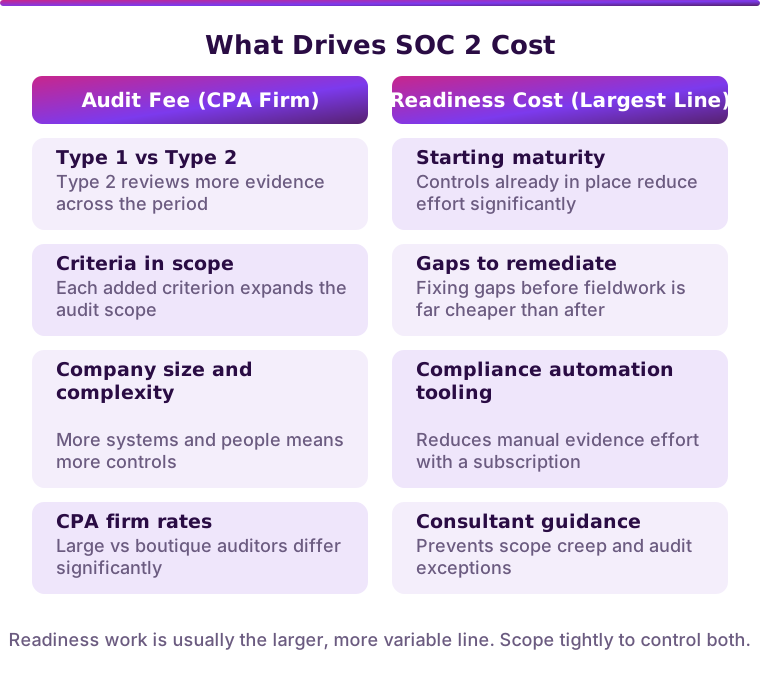
What drives the audit fee
- Type 1 vs Type 2. A Type 1 report (control design at a point in time) costs less than a Type 2 (controls operating effectively over a monitoring period), because Type 2 audit work involves more evidence reviewed over time.
- Scope of Trust Services Criteria. Every SOC 2 covers Security; adding Availability, Processing Integrity, Confidentiality, or Privacy increases the audit scope and the corresponding fee.
- Company size and complexity. More systems, people, and locations mean more controls to examine.
- The monitoring period for a Type 2 audit, agreed with the CPA firm and commonly three to twelve months in practice.
- Audit firm rates. CPA firm rates vary; larger firms with established SOC practices typically charge more, while boutique auditors may offer competitive pricing for companies at earlier stages.
Most companies underestimate how much auditor time is consumed by gaps that surface during fieldwork. An auditor who finds a gap must document it, request remediation, and re-examine, all of which adds cost. That is why a good readiness assessment, run before you engage the CPA firm, is the most reliable way to control total cost.
What drives the readiness cost
- Your starting maturity. If you already have documented policies, access controls, logging, and a security baseline, readiness is faster. Starting from scratch costs more and is the single biggest driver of total cost.
- The number of controls to implement and the gaps to remediate. A thorough readiness assessment surfaces the gaps before fieldwork, so you know what you are paying to fix.
- Whether you use a compliance platform to collect evidence, which adds a subscription but can reduce manual effort significantly. These tools connect to your stack and generate evidence continuously.
- Whether you bring in a consultant to scope, guide, and author the evidence, or do it in-house. Good readiness help typically reduces total cost by preventing audit exceptions and re-engagement.
Want to understand your SOC 2 cost before committing?
Run the free self-assessment and get a clear picture of where your controls stand, so your scope conversation is grounded in reality.
A realistic way to think about the total
Rather than a single number, budget for three buckets: the CPA audit fee, any compliance tooling subscription, and the readiness effort (internal time or a consultant). The audit fee is the most predictable; readiness is where the range is widest, driven almost entirely by how mature your controls already are.
| Cost bucket | What it covers | What drives the range |
|---|---|---|
| CPA audit fee | Licensed CPA firm examines controls and issues the SOC 2 report | Type 1 vs Type 2, criteria in scope, company size, firm rates |
| Compliance tooling | Platform subscription for automated evidence collection | Number of integrations and team size |
| Readiness effort | Scoping, gap assessment, control implementation, policy and evidence work | Starting maturity is the dominant driver; gaps to remediate; consultant vs in-house |
How to keep the cost down without risking the report
Scope only the Trust Services Criteria your customers actually require. Start with a Type 1 if you need a report quickly, then move to a Type 2. Fix the gaps before fieldwork so the auditor is not raising exceptions you pay to resolve later. Get good readiness help early; a well-run readiness phase is cheaper than a failed or delayed audit.
The audit process and what it costs
The audit process for a SOC 2 Type 1 involves the CPA firm reviewing control documentation, interviewing personnel, and testing controls as of the report date. A SOC 2 Type 2 adds sample-based testing of control evidence across the monitoring period. Understanding the audit process helps you budget accurately: the audit begins after readiness work is complete, and the scope of that process is the primary driver of audit fee variation.
Enterprise customers typically expect a SOC 2 report less than twelve months old, so most companies renew annually. For companies that do, the second and subsequent audits typically cost less because the compliance requirements are already embedded and the evidence systems are running continuously.
How Onyx helps
Onyx handles the readiness side of the cost equation: scoping the right criteria, running the gap assessment, implementing controls and authoring policies, collecting and organising evidence, and preparing you for fieldwork with a licensed CPA firm. We focus the work on what your customers require and what the auditor will examine, so you are not paying for scope you do not need. The SOC 2 report is issued by the CPA firm; we make the readiness investment as efficient as possible.
Want a real SOC 2 budget for your company?
Tell us your size, stack, and what customers are asking for, and we will scope readiness on a short call. No obligation.
See also: how to choose a SOC 2 consultant, SOC 2 readiness assessment, and SOC 2 Type 1 vs Type 2. Or take our free security self-assessment for an instant read on your current posture.
The bottom line
SOC 2 costs you an audit fee plus the readiness work to pass it, and the readiness work is usually the larger, more variable line. Budget for the CPA auditor, the readiness effort, and any tooling. Scope tightly to the criteria you need, sequence Type 1 then Type 2 if speed matters, and get a scoping conversation before you assume a number.
FAQ
How much does a SOC 2 audit cost?
SOC 2 has two costs: the audit fee charged by the licensed CPA firm, and the readiness work to get audit-ready. The audit fee is the more predictable line; readiness is the larger and more variable one, driven by your starting maturity and the criteria in scope. Scope your environment to get a real figure.
What is the difference in cost between SOC 2 Type 1 and Type 2?
A Type 1 audit examines control design at a point in time and costs less. A Type 2 audit examines controls operating effectively over a monitoring period agreed with the CPA firm, involving more evidence and effort, so the Type 2 audit cost is higher. Many companies do a Type 1 first, then a Type 2.
Why is SOC 2 readiness more expensive than the audit?
Because readiness includes scoping, gap assessment, implementing controls, authoring policies and evidence, and remediation, and the effort depends heavily on how mature your controls already are. The audit itself is a more standardised, predictable fee by comparison. Total cost is usually dominated by readiness for first-time SOC 2 compliance.
Do I need a compliance automation tool for SOC 2?
Not strictly, but many companies use compliance automation to collect and monitor evidence, which adds a subscription cost but can reduce manual effort. Choose a tool that fits your stack and scope rather than one that locks you in.
How can I reduce my SOC 2 cost?
Scope only the Trust Services Criteria your customers require, consider a Type 1 audit first for speed, remediate gaps before fieldwork to avoid audit exceptions, and get good readiness help early, since a well-run readiness phase keeps total compliance costs down and prevents a delayed or failed audit.