

For a startup, SOC 2 usually arrives as a sentence in an email: "we will need your SOC 2 report before we can sign." Suddenly a compliance project is on the critical path of your biggest deal. This guide explains when a startup actually needs SOC 2, what it takes, and how to get there without derailing the roadmap.
When a startup needs SOC 2
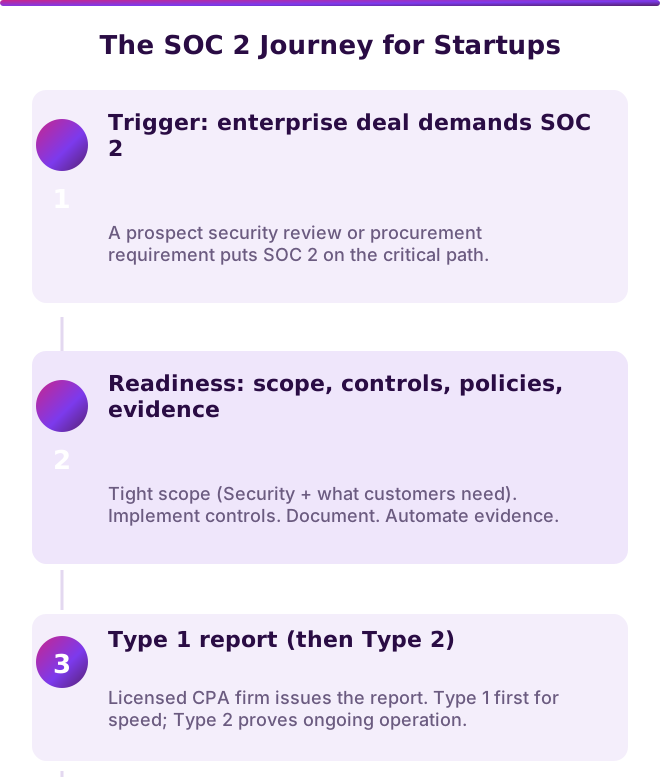
You typically need SOC 2 for startups when you sell software or services that handle other companies' data and an enterprise or mid-market customer makes it a condition of the deal. The trigger is almost always commercial: a prospect's security review, a procurement requirement, or a security questionnaire that asks for your report. If you are pre-revenue or selling only to small businesses that do not ask, you probably do not need it yet. The moment a real deal depends on it, you do.
SOC 2 is also a tool for improving your security posture before you need it rather than scrambling when a deal is on the line.
Type 1 first, usually
Most startups facing a deadline start with SOC 2 compliance via a SOC 2 Type 1, which assesses control design at a point in time and can be achieved faster, then pursue a Type 2 over the following monitoring period. If the customer specifically requires Type 2, you plan straight for it. Getting your startup SOC 2 compliant is about designing and implementing the right controls first, whichever report type you are targeting.
SOC 2 is an attestation, not a certification, but the report from a licensed CPA firm serves the same function in a customer's vendor review.
Not sure where your security controls stand?
Run the free 15-question self-assessment and get an instant readiness score before you commit to a timeline.
What it actually takes
SOC 2 compliance for a startup comes down to a focused set of work. A SOC 2 Type 2 report requires a monitoring period, so the sooner you get controls in place, the sooner that clock starts.
- Scope the right Trust Services Criteria. Every SOC 2 covers Security; add others only if you need them. Tight scope keeps a startup project affordable and achievable.
- Put core security controls in place. Access control and least privilege, multi-factor authentication, logging and monitoring, change management, vendor management, encryption, and an incident response process.
- Document policies. The policies an auditor expects, written to match what you actually do, not generic templates. These form the basis of your compliance program.
- Collect evidence. Often with a compliance automation tool that connects to your stack, which suits startups because it reduces manual effort and improves your security posture continuously.
- Remediate gaps, then audit. Fix what the gap assessment finds before fieldwork with a licensed CPA firm. This is the step most startups underestimate.
Achieving SOC 2 compliance on a startup timeline
A startup needs SOC 2 on a timeline that often compresses what larger companies spread over many months. To achieve SOC 2 compliance without derailing the roadmap:
- Assign a clear owner for the compliance program, not a committee.
- Use automation for evidence collection so engineers stay on the product.
- Scope to the minimum criteria your customer requires, not everything available. Scope is the single biggest cost driver.
- Run the readiness assessment early so you know exactly what to fix.
- Get readiness help to avoid re-work and audit exceptions.
Security and privacy controls, access management, and change management are the core areas your attestation will hinge on. Doing them well from the start makes the process repeatable for future audits.
Keeping it from derailing the roadmap
The startups that handle SOC 2 well treat it as a scoped project with an owner, not an open-ended drain. Scope tightly, lean on automation for evidence, design security controls you would want anyway, and get readiness help so your engineers stay on the product. Done right, SOC 2 also becomes a sales asset: a report you can hand to the next prospect without the back-and-forth. Your security questionnaire responses become much simpler once you are compliant.
How Onyx helps startups
We scope SOC 2 readiness to a startup's reality: the minimum criteria your customers require, the core security controls, the policies and evidence, and preparation for fieldwork with your chosen CPA auditor. We keep your team focused on the product while we carry the compliance load. We are clear that the SOC 2 report itself comes from a licensed CPA firm. Our goal is to help your startup reach SOC 2 readiness on your timeline without unnecessary scope creep.
Got a customer asking for SOC 2?
Tell us the deadline and what they require, and we will scope a path on a short call. No pressure, no obligation.
See also: SOC 2 Type 1 vs Type 2, SOC 2 audit cost, and SOC 2 readiness assessment. Or take our free security self-assessment for an instant first read.
The bottom line
A startup needs SOC 2 when a real deal depends on it. Start with a Type 1 if you are racing a deadline, scope tightly to the criteria your customer requires, implement the core security controls and policies, collect evidence with automation, and remediate before the audit. Treat it as a scoped project and it becomes a sales asset rather than a roadblock.
FAQ
When does a startup need SOC 2?
When an enterprise or mid-market customer makes your SOC 2 report a condition of the deal, usually via a security review, procurement requirement, or security questionnaire. The trigger is commercial. If no customer is asking, you probably do not need it yet.
Should a startup get SOC 2 Type 1 or Type 2?
Most startups facing a deadline start with a Type 1, which is faster and validates control design, then pursue Type 2 over the following period. If the customer specifically requires Type 2, plan straight for it. Designing and implementing security controls is the first priority either way.
How long does SOC 2 take for a startup?
A Type 1 can be achieved relatively quickly once security controls are designed and implemented. A Type 2 adds a monitoring period of several months to a year. Your starting maturity and the scope of criteria largely determine the timeline. Most startups with basic security controls in place can get audit-ready within a few months for a Type 1.
How much does SOC 2 cost for a startup?
It depends on scope and starting maturity, but startups keep cost down by scoping only the criteria customers require, using automation for evidence collection, and getting readiness help so engineers stay on the product. Scope your environment for a real figure rather than assuming a number.
Can a startup do SOC 2 in-house?
A well-resourced team can, but most startups benefit from readiness help to scope correctly, design security controls, author policies, and prepare evidence efficiently. The audit itself is always performed by a licensed CPA firm. Many startups find that in-house attempts underestimate the evidence and policy documentation required.