

When you start a SOC 2 project you immediately face a fork: Type 1 or Type 2. They are not two products to choose between forever; they are two points on the same path. Understanding the differences between SOC 2 Type 1 and Type 2 tells you what to do first, what your customers will accept, and how to sequence the work so you do not pay twice.
The core difference
A SOC 2 Type 1 report assesses whether your security controls are designed appropriately at a single point in time. It answers: do you have the right controls in place today? The SOC 2 Type 1 audit is a snapshot of your control design as of a specific date. The controls are suitably designed if they address the relevant Trust Services Criteria, which is what a Type 1 auditor evaluates.
A SOC 2 Type 2 report assesses whether those controls operated effectively over a monitoring period agreed with the CPA firm, commonly three to twelve months in practice. It answers: did your controls actually work, consistently, over time? Type 2 reports cover the full monitoring period and require continuous evidence of operating effectiveness.
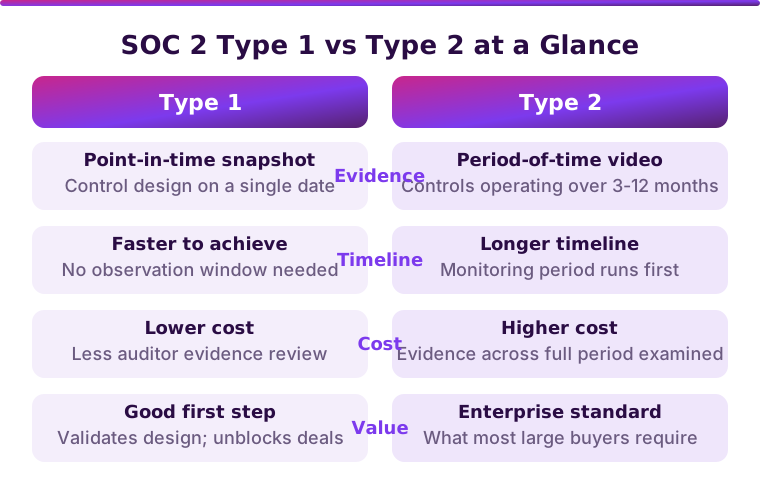
Type 1 is a snapshot. Type 2 is a video. Type 2 is the stronger assurance because it proves the controls are not just written down but lived.
There are two types of SOC 2 reports, not two separate products. A SOC 1 report, by contrast, focuses on internal controls over financial reporting and is a different type of audit entirely. SOC 3 is a public-facing summary of a SOC 2. When a customer asks for your SOC report, they mean SOC 2.
Key differences between SOC 2 Type 1 and Type 2
The key differences between SOC 2 Type 1 and SOC 2 Type 2 come down to time, evidence, and cost:
- Type 1 reports cover a single date; Type 2 reports cover a monitoring period.
- Type 1 audits are faster to complete because there is no observation window to wait through.
- Type 2 audit cost is higher because auditors examine evidence collected across the period.
- Internal controls must be operating continuously for a Type 2, not just present on the audit date.
- Enterprise buyers generally prefer Type 2 because it demonstrates that security controls operate consistently.
Not sure which SOC 2 report your customers need?
Run the free 15-question self-assessment and get an instant readiness score so you can plan the right sequence.
What this means in practice
A Type 1 is faster to achieve because there is no monitoring period to wait through; an auditor examines your control design as of a date. A Type 2 audit requires you to operate your controls across the monitoring window while collecting evidence, then have the auditor examine that period. So Type 2 takes longer and costs more, but it is what most enterprise customers ultimately want, because it demonstrates real, ongoing operation.
A SOC 2 Type 1 audit is often the practical first step: it gets an early report in your hands, validates control design, and sets the clock on the observation window for the Type 2 that follows.
Type 1 or Type 2: which one do you need?
It depends on why you are doing SOC 2. Consider the SOC 2 Type 1 vs Type 2 question from your customer requirements first.
- You need a report fast for a deal. A Type 1 can get you a credible report quickly to show that controls are in place, then you pursue a Type 2 for the period that follows.
- Your customer specifically requires Type 2. Many enterprise buyers will only accept Type 2 reports. In that case, plan straight for it, choosing a monitoring period that fits your timeline.
- You are early and building. Starting with a SOC 2 Type 1 forces you to design and implement your internal controls properly, which is exactly the work a Type 2 then proves over time. It is a natural first step.
- You need a compliance milestone quickly. A Type 1 can unlock deals while your Type 2 observation window runs.
The common sequence
Many companies do a Type 1 first to get an early report and validate control design, then run a Type 2 over the following monitoring period. The two types of SOC 2 reports thus become two phases of a continuous compliance program rather than competing options. This is the most common path because it balances speed with the stronger assurance that enterprise customers ultimately require. Others, especially when a customer demands a Type 2 up front, go straight to it. Neither is wrong; the right choice is dictated by customer requirements and how quickly you need a report.
The difference between SOC 2 Type 1 and Type 2 in terms of timeline is significant: a Type 1 audit can typically be completed in weeks once controls are ready, while a Type 2 requires the monitoring period to run first. ISO 27001 is a related cybersecurity controls framework that some enterprise customers ask for alongside SOC 2, but it is a certification (issued by an accredited certification body) rather than an attestation. Achieving SOC 2 compliance first is often the right sequence since the control work overlaps significantly. This type of audit sequencing is something a good SOC 2 readiness consultant can help you plan for your specific situation.
Some buyers use the term "Type II" (Roman numerals) to refer to SOC 2 Type 2. Both are the same type of report. Whether a customer requests a "Type 2 report" or a "Type II report," they are asking for the same SOC 2 report that covers the monitoring period of operating effectiveness.
Do you need a SOC 2 report? And which type?
If an enterprise customer or prospect is asking, you almost certainly need a SOC 2 Type 2 in the medium term. If you need a report quickly to unblock a deal, a Type 1 is the right first step. The SOC 2 Type 1 evaluates control design; the Type 2 audit process adds the observation period.
Can you achieve SOC 2 with just a Type 1? Yes, for many customers and deal stages. But the stronger the customer, the more likely they will want a full Type 2. Plan for Type 2 from the start so your Type 1 audit period feeds directly into the Type 2 monitoring window.
How Onyx helps
Onyx helps you decide whether to pursue a Type 1 first, a Type 2 directly, or both in sequence, based on your customer demands and timeline. We scope the engagement to the right Trust Services Criteria, run the gap assessment, and prepare all controls, policies, and evidence for fieldwork with a licensed CPA firm. The SOC 2 report is issued by the CPA firm; we make sure you are ready for it.
Facing a SOC 2 deadline?
Tell us what your customers require and we will map the right path in a 30-minute call. No obligation.
See also: SOC 2 audit cost, SOC 2 readiness assessment, and how to choose a SOC 2 consultant. Or take our free security self-assessment for an instant read on where you stand.
The bottom line
A SOC 2 Type 1 proves your security controls are designed correctly today; a Type 2 proves they operated effectively over a period. Type 2 is the stronger assurance and what most enterprise customers want, but Type 1 is faster and a natural first step. Let customer requirements and your timeline decide whether you sequence a Type 1 then Type 2, or go straight to Type 2.
FAQ
What is the difference between SOC 2 Type 1 and Type 2?
A Type 1 report assesses whether your security controls are designed appropriately at a single point in time. A Type 2 report assesses whether those controls operated effectively over a monitoring period agreed with the CPA firm, commonly three to twelve months in practice. The key difference: Type 1 is a snapshot of control design; Type 2 proves ongoing operating effectiveness. Type 1 reports are faster to achieve; Type 2 reports provide stronger assurance and are what most enterprise customers want.
Which SOC 2 report do I need?
It depends on your driver. If you need a report quickly, a SOC 2 Type 1 audit gets you there faster and validates control design. If a customer specifically requires Type 2, or you want the strongest assurance, plan for a Type 2 audit. Many companies do Type 1 first, then Type 2.
Is SOC 2 Type 2 better than Type 1?
Type 2 is stronger assurance because it demonstrates security controls operated effectively over time, not just that they were designed correctly on one date. But Type 1 is faster and a sensible first step, especially if you are still implementing controls or need a report quickly to unblock a deal.
How long does a SOC 2 Type 2 take?
A Type 2 covers a monitoring period agreed with the CPA firm, commonly three to twelve months in practice, during which you operate your controls and collect evidence, followed by the audit. The length of the period plus your readiness determines the total timeline.
Can I go straight to SOC 2 Type 2?
Yes. If a customer requires Type 2 or you want the strongest report, you can plan directly for it, choosing a monitoring period that fits your timeline. You still need your internal controls designed and operating before and during the period. In both cases, a SOC 2 audit requires a licensed CPA firm, and whether you choose Type 1 or Type 2 first is a sequencing question, not a quality question.