


Cyber risk is not a technical problem that lives in the IT department; it is a business risk that lands on the desks of CEOs, CFOs, and boards. As a leader, you do not need to know how an exploit works, but you do need to understand your cybersecurity risks well enough to make decisions about them: what to fund, what to accept, and what to escalate. This guide frames cyber risk in business terms a security leader can act on.
Why cyber risk is a leadership issue
A serious cyber incident is not an inconvenience; it is a business event. It can halt operations, expose customer data, trigger regulatory penalties, lose deals, and damage a reputation that took years to build. Because the consequences are financial, legal, and strategic, accountability sits with leadership, not just with whoever manages the firewall. The leaders who manage cyber risk management well treat it the way they treat any other material business risk: identified, owned, measured, and governed.
Cybersecurity risks have grown in scale and sophistication. Every new cyber threat brings another pressure on security teams and leadership to stay ahead. Threat actors, from ransomware groups to nation-state actors, actively probe organisations for every vulnerability they can exploit. Each vulnerability in your systems, your supply chain, or your people is a potential entry point. Information security is no longer optional; it is a baseline expectation from customers, regulators, and partners. The impact of cyber incidents on business continuity and reputation makes cybersecurity risk management a board-level concern in organisations of every size.
The main categories of cyber risk
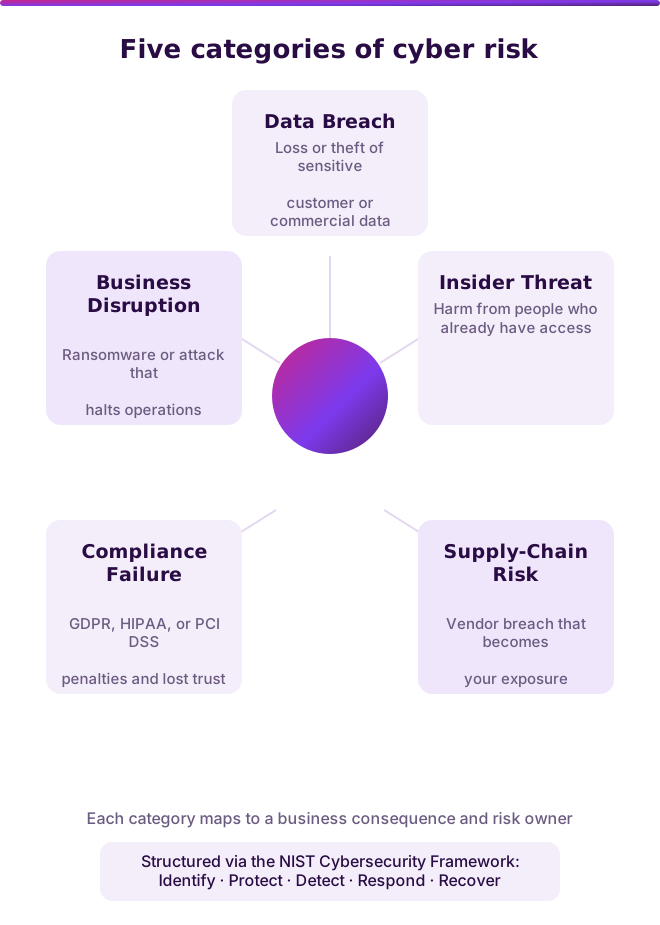
You do not need an exhaustive technical taxonomy, but you should recognise the categories that drive most business impact:
- Data breach. The loss or theft of sensitive data, customer, employee, or commercial, with financial, legal, and reputational fallout. A data breach is often the cyber event that boards remember most.
- Business disruption. Ransomware or a cyber attack that stops you operating, where the cost is measured in downtime and recovery. This is one of the most common cyber threats affecting organisations today. A single cyber event of this type can expose vulnerability in your recovery planning as much as in your defences.
- Compliance failure. Falling short of obligations like GDPR, HIPAA, or PCI DSS, with penalties and lost trust. This is a security breach of a different kind, one that security teams must track alongside technical risks.
- Third-party and supply-chain risk. A breach at a vendor that becomes your breach, because their weakness is your exposure. Organisations must address cyber risks that originate outside their own environment.
- Insider threat. Harm, deliberate or accidental, from people who already have access. Insider threat often bypasses the security controls designed to stop external threat actors, and it remains one of the harder cybersecurity threats to detect and manage.
Each maps to a business consequence, which is how you should weigh them.
Not sure where your biggest cyber risk sits?
Run the free 15-question self-assessment and get an instant readiness score across all five categories.
How to think about cyber risk as a leader
Three questions cut through the technical noise:
- What would hurt us most? Identify the assets and scenarios that would do real damage, your crown jewels and the cyber events you cannot absorb. Focus there first.
- How likely and how bad? Conduct a risk analysis: weigh each cybersecurity risk by likelihood and impact, so you invest in reducing the risks that matter rather than the ones that are merely loud.
- What is our plan? For each significant risk, decide whether to reduce it (by improving security controls or addressing a known vulnerability), transfer it (for example through cyber insurance), accept it consciously, or avoid the activity. Doing nothing is a decision too, and it should be a deliberate one.
What good cyber risk governance looks like
The hallmarks are simple: a named owner accountable for information security, a current view of the organisation's top cybersecurity risks expressed in business terms, regular reporting to leadership and the board, a tested plan for cyber risk management when something goes wrong, and decisions about risk made consciously rather than by default. Security teams need clear objectives to manage risk effectively and to communicate cybersecurity incidents and security information to leadership in terms they can act on.
A cybersecurity risk management framework like the NIST Cybersecurity Framework provides a recognised structure for this process. NIST CSF 2.0 (published February 2024) breaks down into six functions: Govern, Identify, Protect, Detect, Respond, and Recover, giving security teams and leaders a shared language for cyber security risk. The framework is voluntary guidance, widely adopted as best practice, though it may be required by contract or regulation in specific contexts. Aligning to established security standards and security objectives makes it easier to mitigate risks systematically and communicate cybersecurity measures to boards, auditors, and customers. Cybersecurity and Infrastructure Security Agency (CISA) guidance reinforces this same approach: organisations that understand types of cybersecurity risk, conduct regular risk assessments, and set clear security objectives are far better positioned to reduce the security risks that matter most. Part of risk governance is knowing which security risks to accept versus which to address. You do not need to eliminate cyber risk, which is impossible; you need to understand it, manage it deliberately, and be able to show that you are.
The bottom line
Cyber risk is a business risk that belongs to leadership, not just to IT. Understand the categories that drive impact, including data breach, ransomware, compliance failure, supply-chain risk, and insider threat. Use risk analysis to weigh them by likelihood and consequence, decide deliberately whether to reduce, transfer, accept, or avoid each one, and govern the whole with clear ownership and regular reporting. You will not make cybersecurity risks disappear, but you can make them understood, owned, and managed, which is what leadership of it actually means.
How Onyx helps
Onyx works with security leaders who need to understand and manage cyber risk as a business concern, not just a technical checklist. Our risk assessment service maps your organisation's exposure across the categories above, expresses findings in business terms, and gives leadership a clear, prioritised view of what to address and in what order.
For organisations that do not have a dedicated security leader in place, a vCISO can own cyber risk management on a part-time basis, providing the strategy, prioritisation, and board-level communication the role requires. If you have specific compliance obligations driving the review, including GDPR, HIPAA, or PCI DSS, those are addressed as part of the same engagement.
See also: cybersecurity due diligence if a deal or vendor onboarding is driving the review, and our vCISO service overview for leaders who need ongoing cyber risk ownership.
Want a clear, business-readable view of your cyber risks?
We scope a risk assessment on a 30-minute call and give leadership a prioritised picture they can act on.
FAQ
Why is cyber risk a leadership and board issue?
Because a serious cyber incident is a business event with financial, legal, and strategic consequences: halted operations, exposed data, regulatory penalties, lost deals, and reputational damage. Accountability sits with leadership, who should treat cybersecurity risk like any other material business risk, identified, owned, measured, and governed.
What are the main categories of cyber risk for a company?
Data breach, business disruption such as ransomware or cyber attack, compliance failure under regimes like GDPR, HIPAA, or PCI DSS, third-party and supply-chain risk, and insider threat. Each maps to a business consequence, which is how leaders should weigh them.
How should a leader prioritise cyber risks?
Ask what would hurt the business most, conduct a risk analysis of each cyber event by likelihood and impact, and decide deliberately whether to reduce, transfer, accept, or avoid it. This focuses investment on the risks that matter rather than the ones that are merely loud, and treats inaction as a conscious decision.
What does good cyber risk governance look like?
A named owner accountable for information security, a current view of top cybersecurity risks in business terms, regular reporting to leadership and the board, a tested incident plan, and conscious decisions about each significant risk. The aim is not to eliminate cyber risk but to understand, own, and manage it, and to be able to demonstrate that.
Who should own cyber risk if we do not have a CISO?
Someone must be clearly accountable for cyber risk management. If you are not large enough for a full-time CISO, a vCISO can own cyber risk on a part-time basis, providing the strategy, prioritisation, and board communication the role requires while keeping the accountability clear.