

A vCISO, or virtual Chief Information Security Officer, is an experienced security leader who provides CISO-level cybersecurity strategy and oversight to your business on a part-time or contracted basis, instead of as a full-time hire. For a growing company that needs senior security leadership but cannot justify a six-figure executive, it is often the right answer. This guide explains what a vCISO does, when you need one, and how it compares to the alternatives.
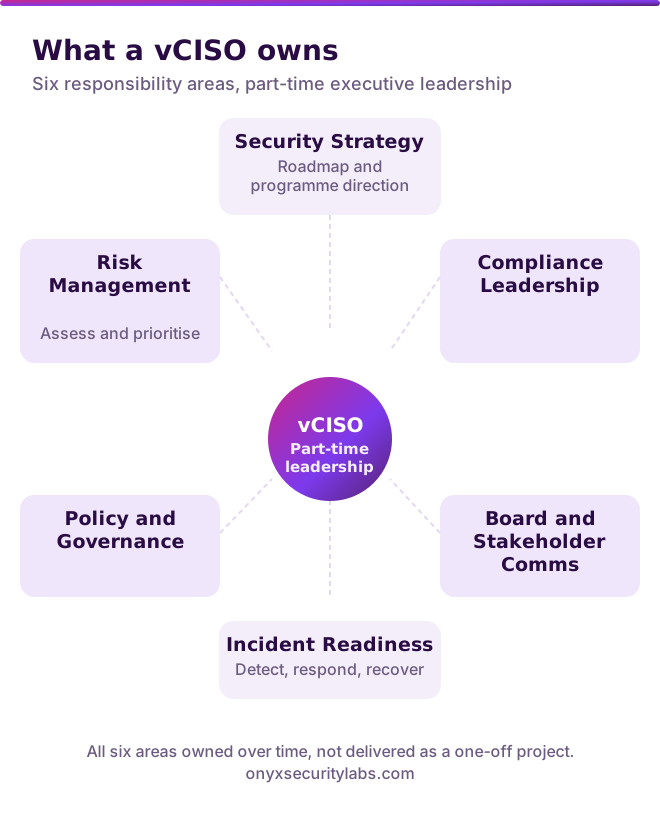
What a vCISO actually does
A vCISO does the job of a CISO, scaled to what you need. That typically includes:
- Security strategy and roadmap: defining where your cybersecurity programme needs to go and in what order, and building a security program that your team can execute.
- Risk management and risk assessment: identifying, prioritising, and tracking the cybersecurity risks that matter to your business. This includes evaluating your security posture and flagging the exposures most likely to lead to a breach.
- Compliance leadership: leading readiness for SOC 2 (which produces a CPA attestation report, not a certification), ISO 27001 (where the certificate is issued by an accredited certification body), HIPAA, PCI DSS, and similar, and owning the relationship with auditors. Meeting compliance requirements means more than checking boxes; a vCISO ensures your controls hold up under audit.
- Policy and governance: putting the right policies, controls, and processes in place. Virtual CISOs translate security strategies into written governance your organisation can follow.
- Incident readiness: making sure you can detect, respond to, and recover from incidents. A vCISO owns the initiative to prepare your team before a crisis, so the response is structured and fast.
- Board and customer communication: translating cybersecurity into business terms for leadership, investors, and enterprise customers.
The difference from a consultant is ownership: a vCISO leads your security program over time, rather than delivering a one-off project.
Not sure where your security programme stands?
Run the free 15-question self-assessment and get an instant readiness score.
When you need a vCISO
A vCISO makes sense when several of these are true:
- You have security responsibilities, often driven by compliance or customer requirements, but no one senior enough to own them.
- You are too small or too early to justify a full-time CISO salary, but too exposed to leave cybersecurity to chance.
- Your engineers are handling cyber risks off the side of their desks and it is not working.
- A customer, investor, or board is asking who owns security, and you do not have a clean answer.
- You are pursuing SOC 2 readiness (for an attestation report), ISO 27001 certification readiness, or similar and need someone to lead it, not just advise.
If you need a full-time CISO and can justify the headcount, hire a full-time CISO. If you are not there yet, a vCISO gives you the leadership without the overhead.
How companies outsource security leadership
Many growing companies outsource CISO-level leadership because the in-house alternative is a full-time executive salary before the business is ready for it. An in-house CISO is the right call eventually; a vCISO is how you get the same level of judgement, accountability, and cybersecurity strategies in place while you scale. vCISOs bring experience from many environments, so they implement proven practices faster than a first-time hire would.
When you hire a vCISO or engage a vCISO service, you get a security leader who understands your specific needs and can build or strengthen your security program from day one. A traditional CISO hire takes months to recruit and onboard; a vCISO is operational immediately. The right vCISO helps with security awareness training for your team, establishes security controls that match your risk profile, and uses a proactive approach to reduce exposure before an incident occurs. Organisations that need real cybersecurity leadership but are not yet ready for a full-time executive appointment find that a vCISO offers the most practical path forward. You get CISO-level judgement without hiring a full-time chief information security officer, and the engagement scales as your security needs grow.
What a vCISO is not
A vCISO is not a full-time employee, not a tool, and not a junior analyst. They are a senior leader who plugs in for the time you need, brings experience from many environments, and is honest about what you do and do not need. A cybersecurity expert who works as a vCISO provides the same strategic value as a full-time hire, at a fraction of the cost. Used well, a vCISO is a force multiplier for your existing security team, not a replacement for doing the work.
The bottom line
A vCISO is senior cybersecurity leadership on a flexible, part-time basis: strategy, risk assessment, compliance, governance, and incident readiness, owned over time rather than delivered as a one-off. It is the right fit for a growing company that needs a CISO's judgement and accountability but is not ready for a full-time executive. If a customer or board is asking who owns your security, a vCISO is often the answer.
How Onyx helps
Onyx provides vCISO services scaled to your organisation's actual needs. We cover cybersecurity strategy and roadmap, risk management, and compliance readiness leadership across SOC 2 (attestation report), ISO 27001 (certification from an accredited body), HIPAA, and PCI DSS, governance and policy, incident response planning, and board and customer communication. We own outcomes and work alongside your existing team rather than around it. The engagement scopes to the level of leadership you genuinely need, whether that is a few days per month of oversight or a more hands-on compliance push.
We give you an honest read on what you need and what you do not. Every engagement starts with a short scoping call.
Ready to put a security leader in place?
Tell us your situation and we will scope the right level of vCISO leadership on a 30-minute call.
See also: fractional CISO vs vCISO vs full-time CISO, how to choose a vCISO service, and our vCISO service page. Or take the free security self-assessment to see where you stand before we talk.
FAQ
What is a vCISO?
A vCISO, or virtual Chief Information Security Officer, is an experienced cybersecurity leader who provides CISO-level strategy and oversight on a part-time or contracted basis instead of as a full-time hire. They own your security program over time, covering strategy, risk, compliance, governance, and incident readiness.
What does a vCISO do?
A vCISO sets your cybersecurity strategy and roadmap, manages risk through regular risk assessments, leads readiness for SOC 2 attestation reports and ISO 27001 certification (issued by accredited bodies), establishes policies and governance, ensures incident readiness, and communicates security to your board, investors, and enterprise customers, all scaled to what your business needs.
When does a company need a vCISO?
When you have security responsibilities but no one senior to own them, you are too small to justify a full-time CISO but too exposed to ignore cybersecurity risks, your engineers are stretched, or a customer, investor, or board is asking who owns security. A vCISO gives you the leadership without the full-time overhead.
What is the difference between a vCISO and a security consultant?
Ownership. A consultant typically delivers a one-off project or advice. A vCISO leads your security program over time, taking accountability for security strategies, risk, and compliance requirements the way a full-time CISO would, scaled to your needs.
Is a vCISO cheaper than a full-time CISO?
Yes. A vCISO provides senior leadership on a part-time or contracted basis, so you pay for the time you need rather than a full executive salary and benefits. It suits companies that need CISO-level judgement but are not yet ready to hire a full-time CISO in-house. A vCISO or a traditional CISO role can both carry the same certification credentials, but a vCISO brings cross-industry experience that a single in-house hire often cannot match.