


Under the GDPR, some organisations are required to appoint a Data Protection Officer (DPO), and many others benefit from one without being able to justify a full-time hire. An outsourced DPO, also called DPO as a service, fills that gap: an experienced data protection professional who acts as your DPO on a contracted basis. This guide explains what the role is, who needs it, and how outsourcing it works.
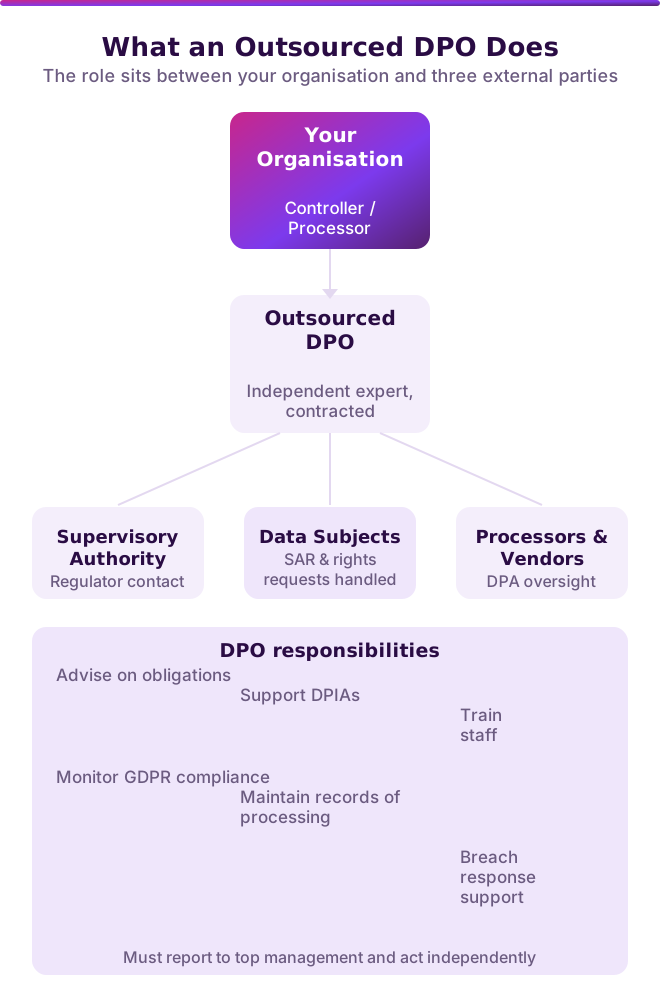
What a Data Protection Officer does
A Data Protection Officer is an independent expert who oversees your organisation's data protection and GDPR compliance. The GDPR sets out the core tasks of the DPO, which include:
- Advising the organisation and its staff on their data protection obligations and GDPR obligations.
- Monitoring compliance with the GDPR and your internal data protection policies and data protection practices.
- Advising on Data Protection Impact Assessments (DPIAs) and monitoring their performance where processing is likely to result in high risk.
- Acting as the contact point for the supervisory authority and for individuals (data subjects) whose personal data you process. This includes handling subject access requests and data subject requests.
- Training staff on data protection obligations and maintaining awareness across the organisation.
Crucially, the DPO must be able to act independently: the DPO must report to the highest level of management and must not be given instructions regarding the exercise of their tasks. That independence is part of why outsourcing the role can work well. An internal DPO who holds other duties risks a conflict of interest; an outsourced DPO avoids that problem by design.
Who needs a DPO
The GDPR requires you to appoint a DPO if you are a public authority or body, if your core activities involve large-scale regular and systematic monitoring of individuals, or if your core activities involve large-scale processing of special category data, such as health data, biometric data, or genetic data, or data relating to criminal convictions. UK GDPR carries the same requirement.
Must appoint a DPO? That triggers a formal obligation. But many organisations that are not strictly required to appoint a DPO still choose to appoint one voluntarily, because an outsourced DPO gives them a clear owner for data protection compliance, a credible point of contact for customers, supervisory authorities and data subjects, and documented best practice. If you are unsure whether you must appoint a DPO, that assessment is itself a good reason to get expert input.
| Organisation type | DPO required? | Why |
|---|---|---|
| Public authority or body | Yes | Mandatory under GDPR Article 37 |
| Large-scale systematic monitoring of individuals | Yes | Core activity involves regular monitoring at scale |
| Large-scale processing of special category data | Yes | Health, biometric, genetic, criminal conviction data |
| SME processing employee or customer data only | Not required, often beneficial | Voluntary appointment gives clear ownership and assurance |
| Startup with limited personal data | Not required, often beneficial | External DPO scales to need without full-time hire cost |
Not sure if you need a DPO?
Run the free self-assessment to see your current GDPR and data protection posture in 15 questions.
Why outsource the DPO role
An outsourced DPO gives you the expertise and independence of the role without the cost and difficulty of a specialist full-time hire. An external DPO suits organisations that need a DPO, or want the assurance of one, but do not generate a full week of DPO work. You get someone who does this across many organisations, brings current regulatory knowledge, and provides the documented independence the role requires.
Outsourcing the DPO role also avoids the conflict of interest that can arise when an internal person with other duties tries to wear the DPO hat. The DPO must remain independent; combining the role with responsibilities like IT management or legal counsel creates structural problems that an external DPO resolves.
For organisations that need specialist data protection expertise without the cost of a full-time hire, DPO as a service is the practical route. An outsourced data protection officer service delivers peace of mind alongside a clear compliance record. Outsourced DPO services are available to organisations of all sizes, from early-stage companies handling limited personal data to mid-market organisations with complex data processing activities. DPOs and DPOs working in an outsourced model bring the same regulatory obligations and the same independence requirements as an in-house appointment.
What DPO as a service typically includes
A typical outsourced DPO engagement covers:
- Ongoing advice on data protection obligations, data protection law, and GDPR compliance.
- Monitoring compliance with the GDPR and internal data protection policies.
- Supporting Data Protection Impact Assessments where high-risk processing activities are planned.
- Handling data subject requests, including subject access requests, and helping manage data breaches.
- Maintaining records of processing activities and keeping your data protection documentation current.
- Training staff on data protection compliance and relevant obligations.
- Serving as the registered contact point for your supervisory authority, so regulators and data subjects know where to go.
The level of involvement is scoped to your needs. An outsourced DPO service can be structured as a retained advisory arrangement or as a more hands-on compliance function, depending on the complexity of your data processing activities and the size of your organisation.
The bottom line
An outsourced DPO, or DPO as a service, gives you an independent, expert Data Protection Officer on a contracted basis. You need a DPO under GDPR if you are a public authority, or if you conduct large-scale systematic monitoring or process special category data at scale, and many others appoint a DPO voluntarily for the assurance and clear ownership it brings. An external DPO delivers the data protection expertise and independence without a full-time hire, scaled to your data protection needs.
How Onyx helps
Onyx's DPO as a Service gives your organisation an independent, experienced Data Protection Officer on a contracted basis. We serve as your registered DPO contact point with supervisory authorities and data subjects, advise on GDPR obligations, monitor your data protection practices, support DPIAs, handle subject access requests, and keep your records of processing activities current.
The engagement is scoped to your level of need: a lighter retained model for organisations with a limited personal data footprint, or a more involved compliance function for those with complex or high-risk processing activities. Because we serve multiple organisations, we bring current regulatory knowledge and genuine independence, which is exactly what the GDPR requires of the role.
If you are working through broader GDPR compliance rather than just the DPO question, our data protection assessment gives you a structured view of the gaps, and our GDPR compliance service covers the programme end to end.
See also: GDPR compliance checklist: the essentials, DPO as a Service.
Need a DPO, or want to know if you do?
Tell us about your data processing activities and we will advise on a short call. No obligation.
FAQ
What is an outsourced DPO?
An outsourced DPO, or DPO as a service, is an experienced data protection professional who acts as your organisation's Data Protection Officer on a contracted basis rather than as a full-time employee. They provide the independence and expertise the GDPR role requires, scaled to your data protection needs.
Who is required to have a Data Protection Officer?
Under the GDPR and UK GDPR, you must appoint a DPO if you are a public authority, if your core activities involve large-scale regular and systematic monitoring of individuals, or if they involve large-scale processing of special category data such as health, biometric, or genetic data. Others choose to appoint a DPO voluntarily for assurance and clear ownership of data protection compliance.
What does a Data Protection Officer do?
A DPO advises the organisation and staff on data protection obligations and GDPR compliance, monitors compliance with the GDPR and internal data protection policies, advises on Data Protection Impact Assessments, handles subject access requests, and acts as the contact point for supervisory authorities and for data subjects. The role must be independent, reporting to top management.
Why outsource the DPO role instead of hiring?
Outsourcing gives you the data protection expertise and documented independence the role requires without the cost of a specialist full-time hire. It suits organisations that need a DPO but do not generate a full week of DPO work. It also avoids the conflict of interest an internal person with other duties might face, since the DPO must not be given instructions regarding the exercise of their tasks.
What does DPO as a service include?
Typically ongoing advice on data protection law and GDPR obligations, monitoring compliance with internal data protection policies and practices, supporting Data Protection Impact Assessments, handling subject access requests and data breaches, maintaining records of processing activities, training staff, and serving as the registered contact point for your supervisory authority, all scoped to your level of need.